

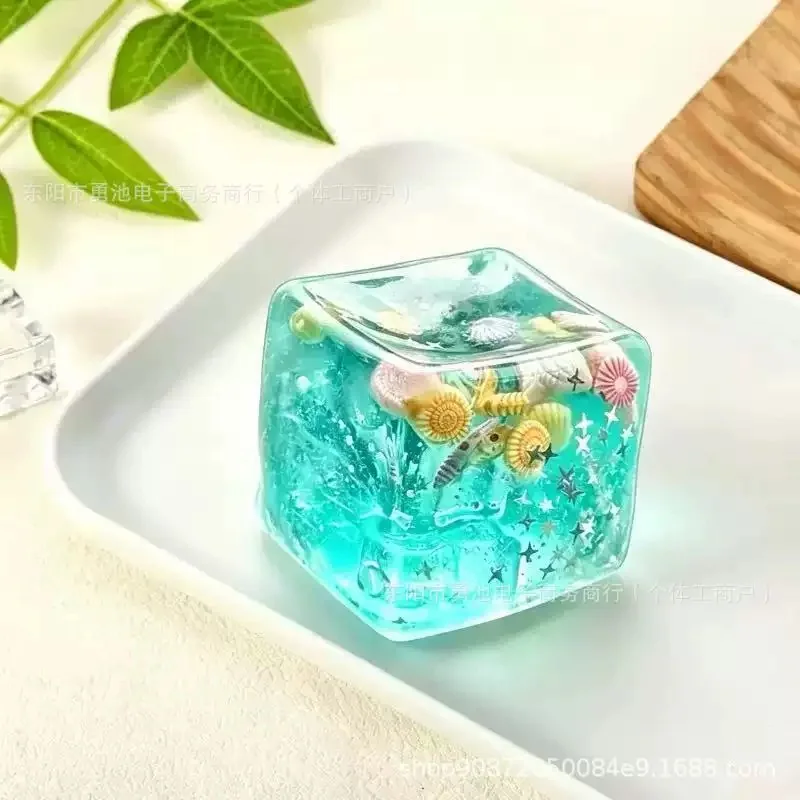
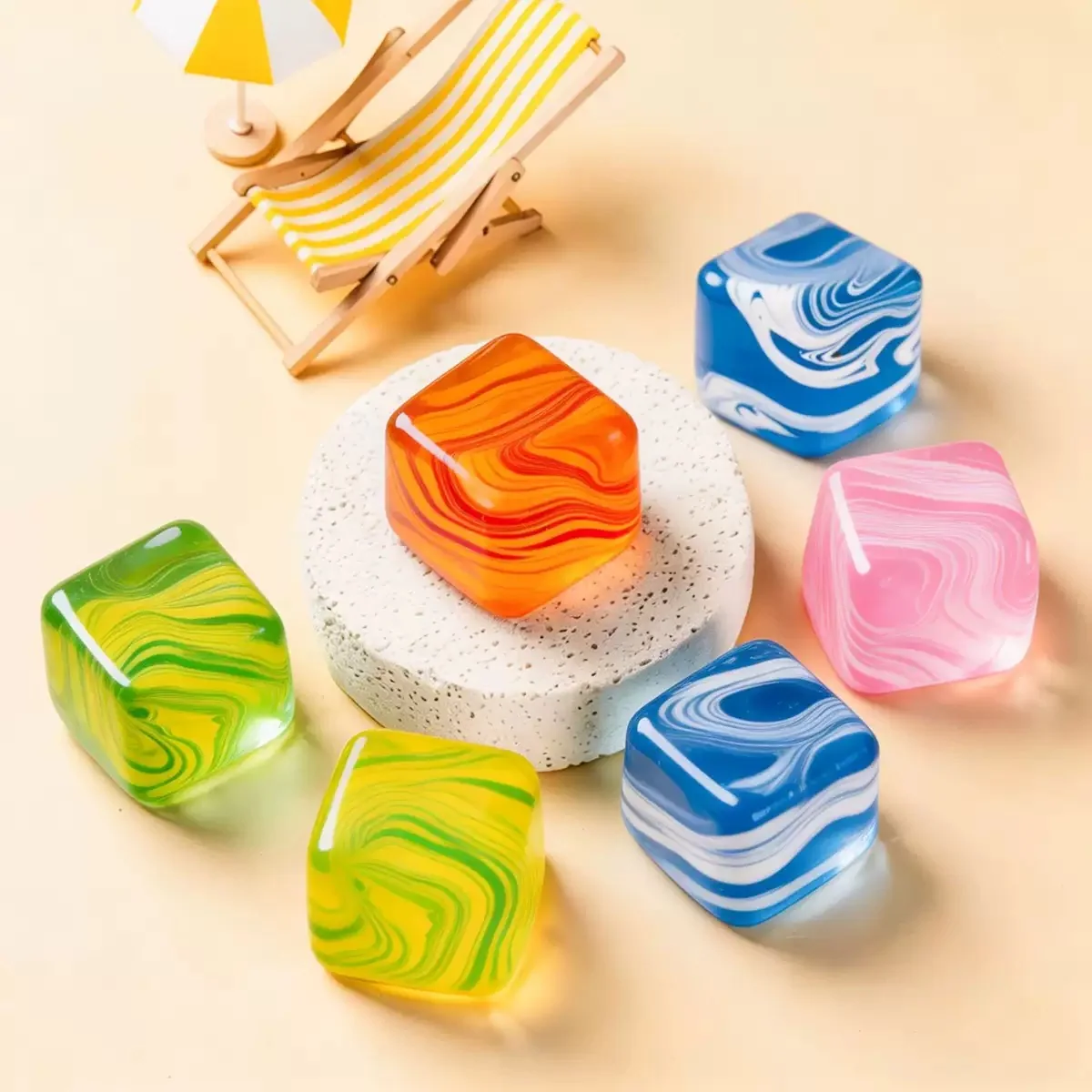
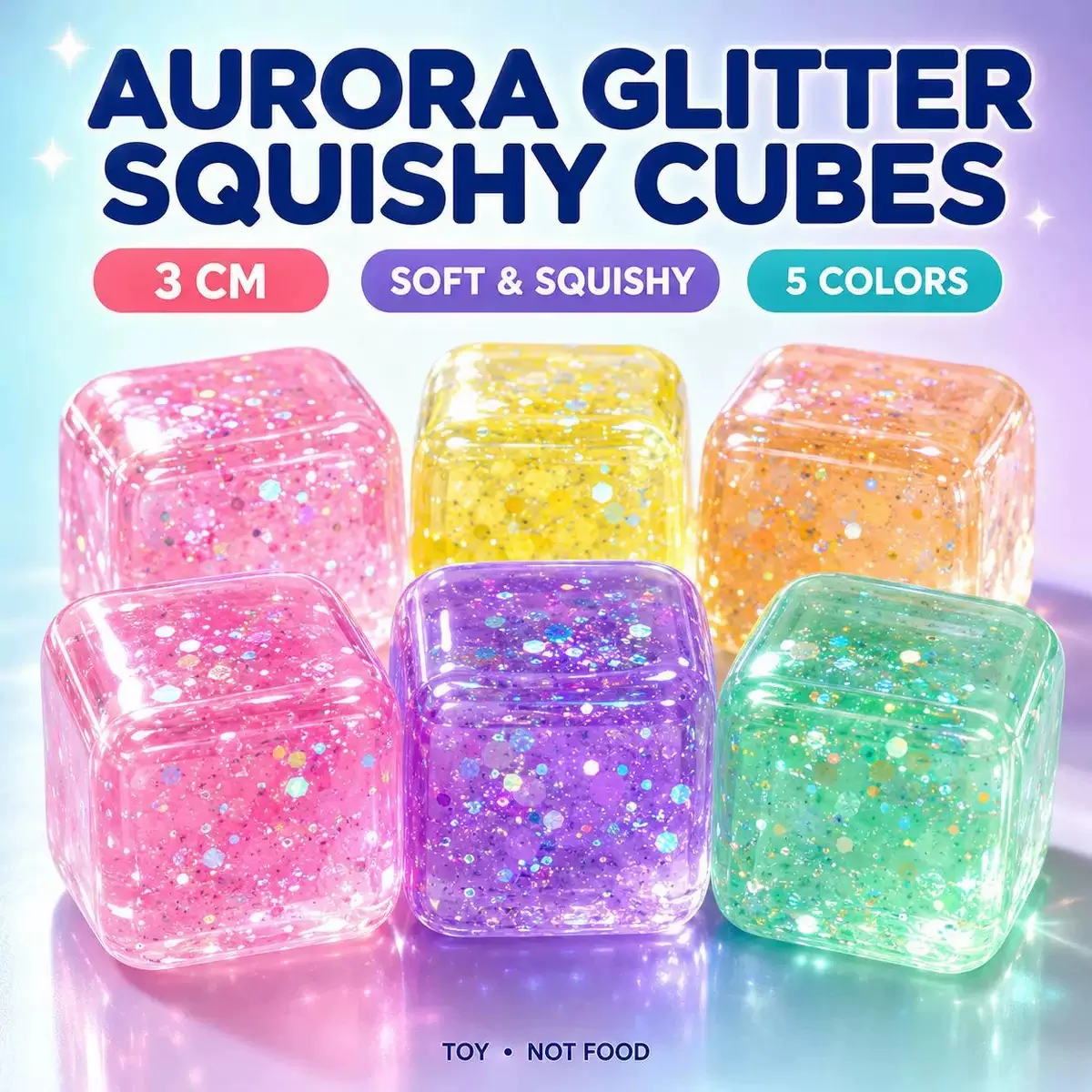
A foam stress toy is a light, dry squeeze tool that keeps its molded shape during work breaks. Because foam has no liquid core, it stays neat beside a keyboard. Gel balls can leak if punctured, and soft rubber toys often grab desk lint.
For most adult hands, standard stress toys run 2.5 to 3.5 inches (about 6.4 to 8.9 cm). That span fills the palm without cramping the fingers. For example, the Pink Cheese Squishy (7 cm) sits in that middle tier at 7 cm (about 2.75 inches) and $14.99 USD. Even so, buyers should check any squishy weekly for tears and wipe it with a damp cloth instead of soaking it.
What Makes a Foam Stress Toy Feel Different from Gel, Rubber, and Sticky TPR?
A polyurethane foam stress toy feels light and airy when you press it. It also keeps nearby desk papers dry. According to iStressBall’s sizing guide, polyurethane foam compresses well and bounces back to its original outline. Makers also mold it into spheres, cubes, animals, and novelty food blocks.
By contrast, 1001 Stress Balls reports that gel-filled or bead-filled balls feel more fluid inside. However, sharp items on a desk can puncture those soft shells. Meanwhile, natural rubber or latex stress balls give firmer hand resistance and quicker rebound. Therefore, anyone with a latex allergy should check the outer shell first.
In addition, the National Capital Poison Center lists sticky thermoplastic rubber “splat balls” alongside fabric-covered shells. Those covers can hold foam, gel, powder, or water beads. In practice, comparing each shell side by side helps you pick a dry desk feel.
| Material Type | Squeeze Feel | Desk Mess Risk | Main Trade-Off |
|---|---|---|---|
| Polyurethane foam | Light, airy bounce | Dry exterior; no liquid core | Very soft foam wears faster under heavy pinching |
| Gel or water beads | Fluid, shifting press | Leaks if punctured by sharp objects | Swallowed water beads pose rare bowel risk |
| Natural rubber or latex | Firmer grip, quick snap | Dry cover with firm return | Check for latex allergies before daily use |
| Thermoplastic rubber (TPR) | Stretchable, pliable press | Often sticky; grabs desk dust | Tacky finish bothers people who prefer dry hands |
How Do Mini, Standard, and Large Foam Stress Toy Sizes Fit an Adult Hand?
Standard squeeze toys are sized for adult palms, so they give a full grip beside a mouse. According to iStressBall, foam stress balls fall into three common size tiers. Mini toys measure under 2 inches (about 5 cm) for easy carrying. Standard pieces run 2.5 to 3.5 inches (6.4 to 8.9 cm), while Large toys exceed 3.5 inches up to 20 cm.
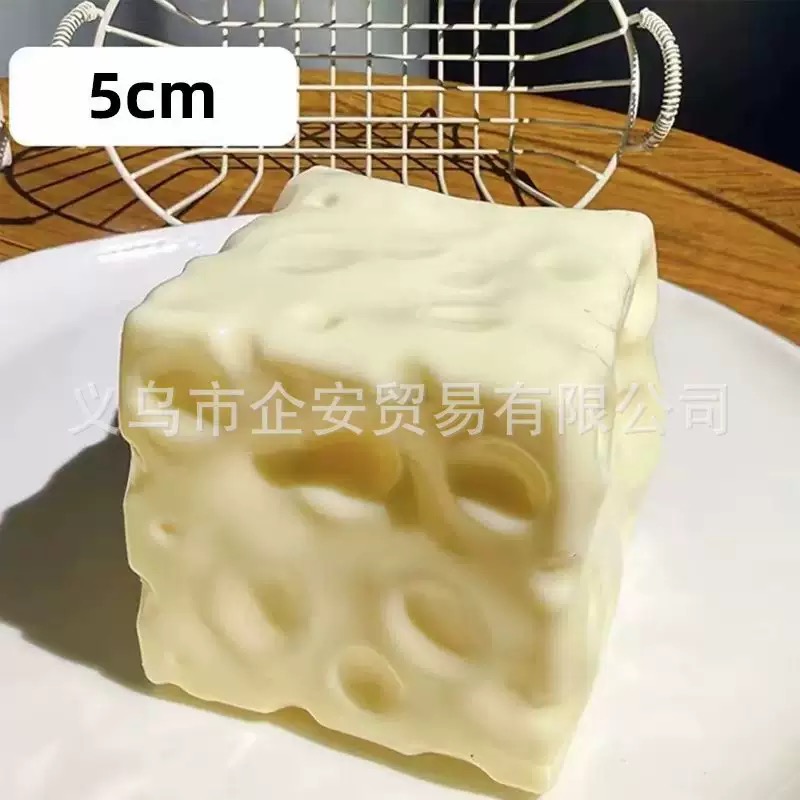
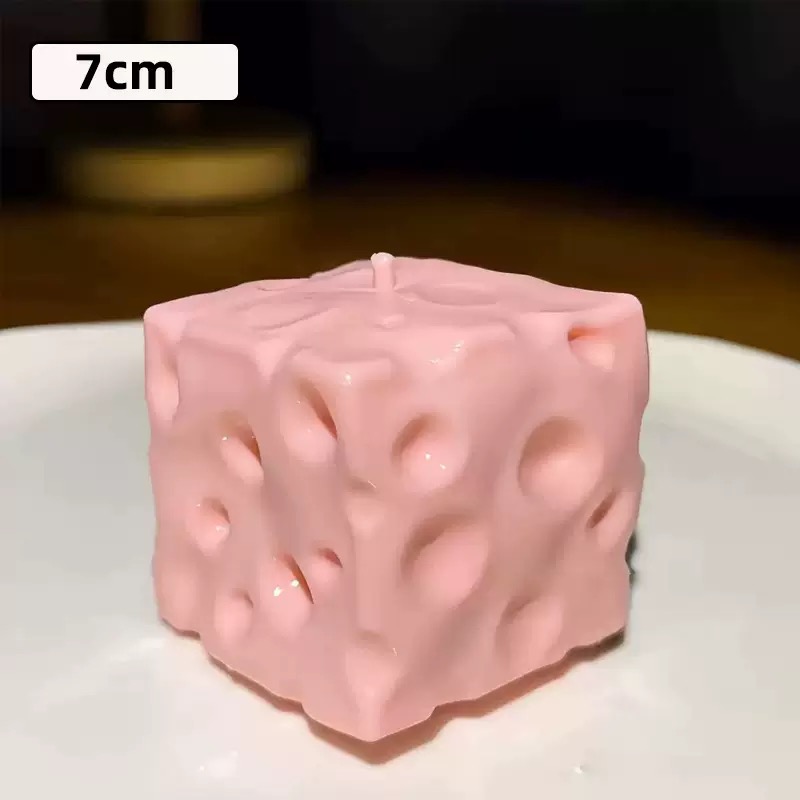
For example, the 7 cm scale (about 2.75 inches) on the Pink Cheese Squishy (7 cm) sits inside the Standard adult tier. However, a sculpted cheese block with rounded holes feels different from a smooth 7 cm ball. Instead, your fingertips rest inside the curved dimples while your palm presses the wider edges. Because shape changes grip contact, check both centimeter size and surface outline before buying.
| Size Tier | Typical Measurement | Palm Fit and Storage | Typical Example |
|---|---|---|---|
| Mini | Under 2 inches (about 5 cm) | Pocket-friendly for travel or smaller hands | Compact giveaway or keychain foam balls |
| Standard | 2.5 to 3.5 inches (6.4 to 8.9 cm) | Full adult palm grip; neat desk footprint | Pink Cheese Squishy (7 cm), $14.99 USD |
| Large | Over 3.5 inches (up to 20 cm) | High visual presence; bulkier in drawers | Oversized novelty desk pieces |
How Do Firmness and Surface Tackiness Affect Desk Durability?
Firmness sets a clear trade-off between light hand pressure and daily desk wear. According to 1001 Stress Balls, softer foam needs less hand strength and suits smaller hands. On the other hand, firmer or high-density foam gives stronger resistance and lasts longer under repeat squeezes.
In practice, surface feel and odor matter just as much to regular desk buyers. For instance, an r/fidgettoys thread on pressable shapes recommended squishies for holding an outline, though one commenter warned that cheap pieces tear under steady use.
Similarly, a commenter in an r/autism thread on non-sticky squeeze toys preferred a firmer cube with a less tacky finish. That user found a softer round ball collected heavy dust, and added that cheap squishies can smell strong. Because fingernails dig into molded seams, squeezing with flat finger pads prevents early splits.
Confirmed Specs for Pink Cheese Squishy (7 cm)
The Pink Cheese Squishy (7 cm) is a pink cheese-shaped squishy with rounded holes priced at $14.99 USD. Its product photo confirms the 7 cm scale (about 2.75 inches), placing it in the Standard adult tier. Meanwhile, shoppers who want to compare other novelty shapes and styles can browse the full CheeseSquishy Shop.
The product page confirms the 7 cm size, pink rounded-hole shape, and $14.99 USD price. It does not publish gram weight, density ratings, polymer chemistry, or timed rebound seconds. Therefore, treat general polyurethane foam traits as category context rather than lab results for this toy. Also, this item is a non-food desk toy, not edible cheese or a medical device for ADHD, anxiety, or hand therapy.
How Should You Clean, Store, and Inspect a Foam Stress Toy?
Dry storage and damp-cloth wiping are the safest habits for keeping a foam stress toy clean. According to the National Capital Poison Center, stress balls belong in a cool, dry place. They also belong out of reach of unsupervised young children so nobody bites off choking-hazard chunks.
Poison Control also advises checking squeeze toys often and discarding torn pieces right away. In addition, users should take breaks instead of squeezing hard for long stretches. Commenters in the r/autism non-sticky fidget thread mentioned washing rubbery squishies with light baby powder or trying fabric-covered gel balls. However, painted or foam-style squishies hold up better without soaking. In practice, follow this short checklist for the Pink Cheese Squishy (7 cm) and similar desk toys:
- Wipe dust and skin oils off with a slightly damp cloth, then air-dry the toy before storage.
- Keep the toy away from direct heat, bright window ledges, and water baths to avoid trapped moisture.
- Check recessed cheese holes and edges once a week, and discard any piece that starts splitting.
- Press with flat finger pads instead of digging fingernails into molded corners during long calls.
- Store food-shaped squeeze toys up and away from unsupervised young children and pets.
Frequently Asked Questions
What are some common types of stress toys and how does foam compare?
Stress toys span soft shell and fill designs including molded foam, liquid gel, water beads, natural latex, tacky thermoplastic rubber (TPR), and cloth covers, according to the National Capital Poison Center. In practice, dry foam stays featherlight, holds novelty outlines like a 7 cm cheese block, and keeps liquids off desk gear. Gel shifts inside the hand yet risks leaks near sharp desk tools, while latex offers sharper rebound for non-allergic buyers.
What is the foam inside most foam stress toys?
Polyurethane foam is the standard material inside most molded stress toys, according to iStressBall. Makers favor this foam because it compresses evenly and springs back to its original silhouette. For example, factories mold it across Mini (under 5 cm), Standard (6.4 to 8.9 cm), and Large (over 8.9 cm) novelty shapes. Still, individual squishy listings vary, so check each product page before assuming a specific polymer blend.
How can you stop a squishy desk toy from feeling sticky or tearing early?
Keeping your desk toy away from heat and humidity limits surface tackiness and splits over time. According to Poison Control, checking squeeze toys often for damage, tossing torn pieces right away, and resting your hands between hard grips keeps them safer. For example, using broad palm pressure instead of fingernails shields curved edges on a 7 cm pink block, while air-drying after light wiping avoids trapped dampness.